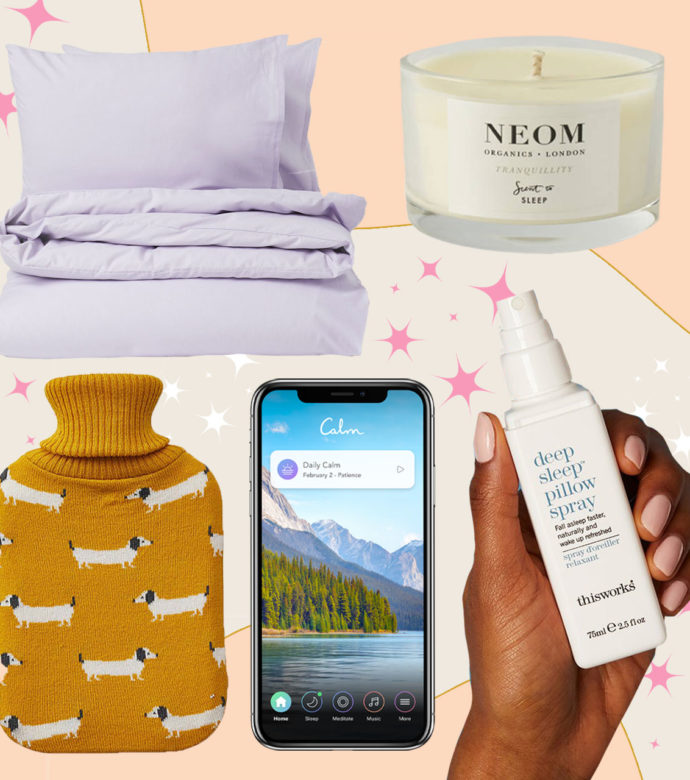
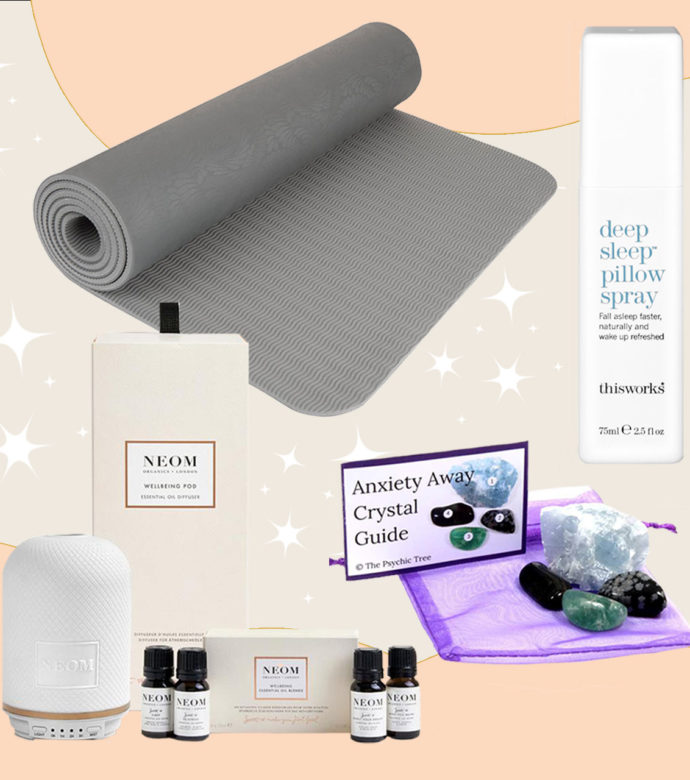
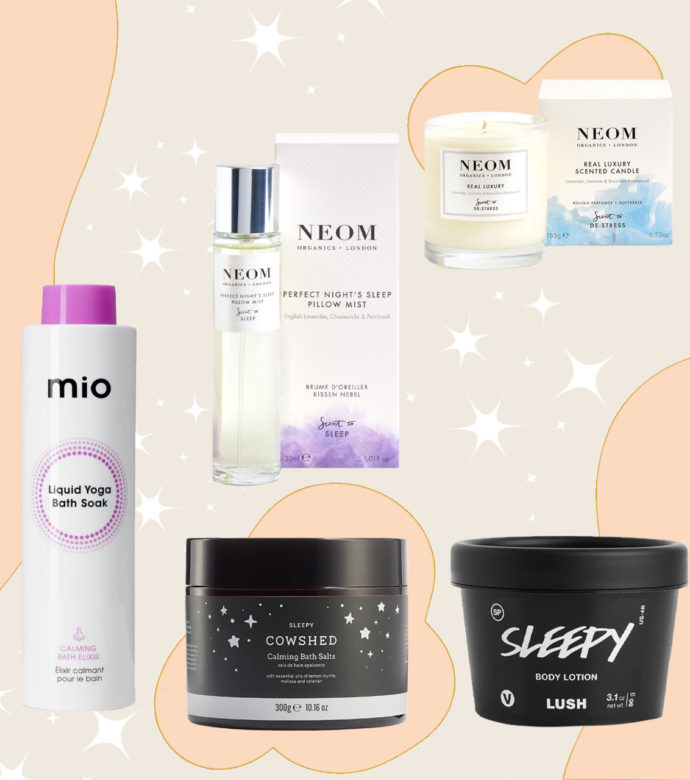
Weekly Wants: Things Keeping Us Sane in Lockdown 3.0
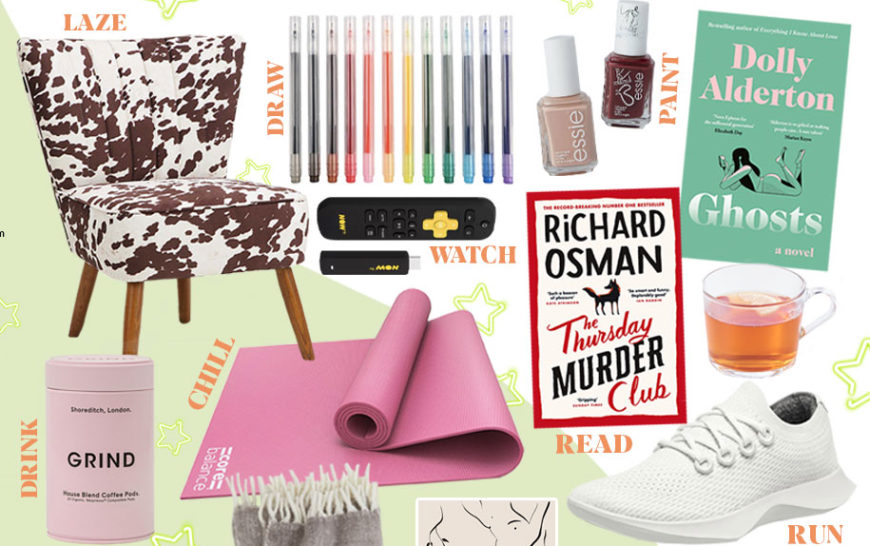
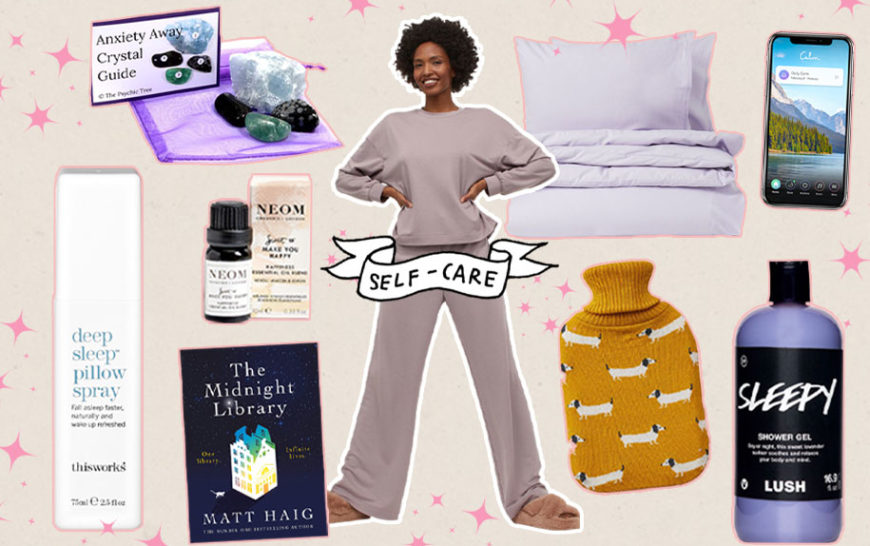
This week's edit of team picks focus on the little things in our mini toolkits of self lurve that help us switch off when your laptop closes at 6pm or before the groundhog day stresses kick in.
Almost 12 months of restrictions and lockdowns later, we can feel sure in saying that if your current vices are looking something like Bridgerton, Deliveroo and scrolling TikTok at any given opportunity then you’re certainly not alone. Did someone say round 5 of that spoon scene?
Here’s to putting well-being at the top of your daily to-do list. Anyone for a slice of banana bread?
Despite what has truly felt like a never-ending slog at times, focusing inward and prioritising self-soothing, comfort and peace is always a good idea for keeping your mental health in check at a time of real vulnerability. This week’s edit of team picks focus on the little things in our mini toolkits of self lurve that help us switch off when your laptop closes at 6pm or before the groundhog day stresses kick in.
From books to beauty, crafts to coffee, running to reading and all the binge-worthy tv we can’t get enough of, it’s safe to say we know the things that always have our back in moments of panic or boredom during lockdown 3.0. Here’s to putting well-being at the top of your daily to-do list. Anyone for a slice of banana bread?
Charlotte
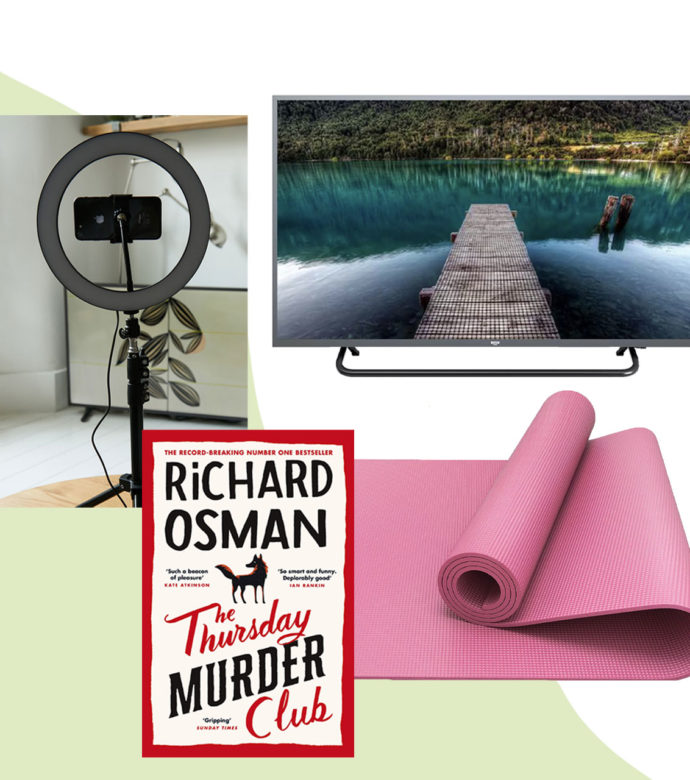
I keep having my ups and downs during lockdown 3.0 (as we all do) but equally I’ve kind of found a rhythm and routine that has kept me sane and busy. One such thing that keeps my weekday evenings exciting is watching season 6 of Married at First Sight Australia. Not only is it super super juicy, but the fact it’s on every night genuinely gives me some structure and something to look forward to, so the TV in my room has been a great investment!
Now would probably be a good time to try and reduce my screen time, but alas that has not been the case. Instead, I’ve been spending a lot of time on TikTok and Instagram, meaning a tripod is quite the essential for me right now. It’s definitely keeping me entertained! Aside from technology, I have been trying to take life a bit slower, read more (one of my new year’s resolutions) and make time for some gentle stretching and yoga so I’ve definitely got my money’s worth from the mat I bought before lockdown 2.0!
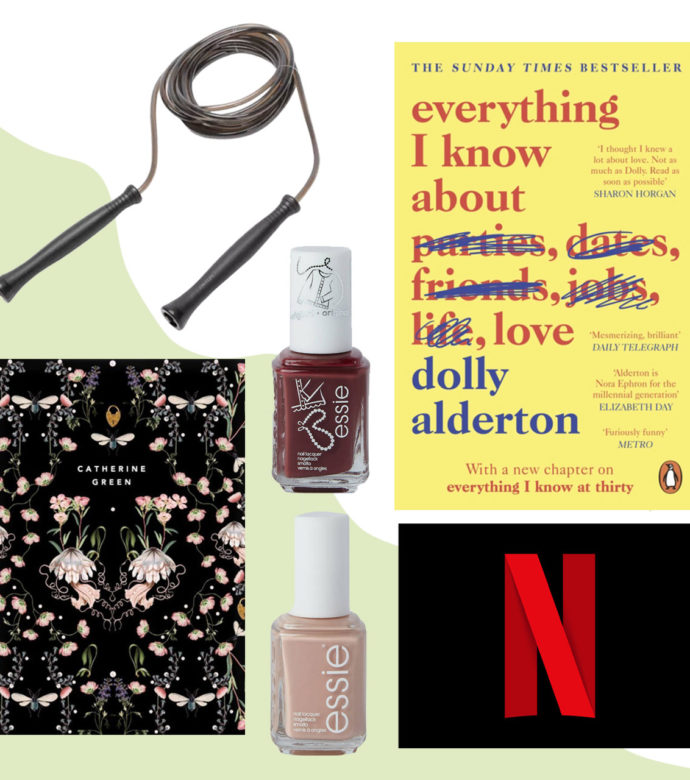
This lockdown definitely feels harder and I haven’t wanted to put pressure on myself to be productive or learn a new skill etc. I have found journaling has really helped me this lockdown, putting all my thoughts and feelings on to paper really allows me to work through any negative emotions I am feeling. I’ve also found painting my nails to be so therapeutic and it’s nice to take that time for yourself. Reading and Netflix are also massively getting me through, can’t beat a good book or series! Skipping has also been great for me recently, I only do about 10 mins at a time, but it’s a good source to release some energy. You can do it anywhere too, in a garden, park, even inside, you don’t need any real skill but learning little tricks like crisscrossing is fun!
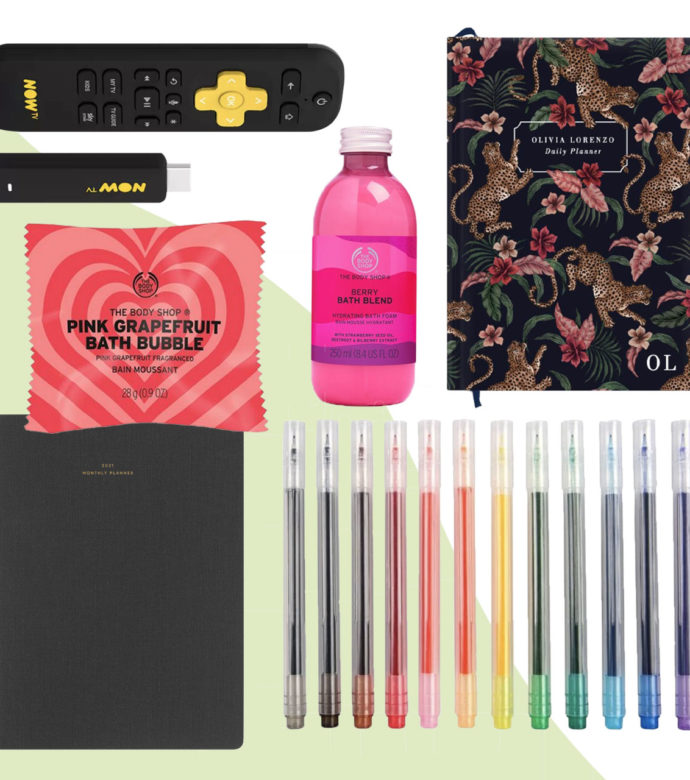
I think I used up all my productivity in the first 500 lockdowns so I’m giving myself a break and probably just doing some chilling and easy things that I enjoy. Binge Geordie Shore and random football matches. Is it weird that watching a football match that in no way affects my team is my happy place? I’m also going to use this time to get organised for the coming year and set goals so get me all the stationary!
If you mean apart from my Heinz Tomato Soup luncheons, Diet Coke and rewatching Bridgerton for the 5th time, then it has to be books, seafront jogs and daytime baths (quite the lockdown 3.0 revolution). Reading and running are both my go-to stress relievers, whatever is going on. I’ve just added a pair of new running trainers to my birthday wish list actually because both my big toes are currently poking through the pair I have right now. That’s how desperate my toes are to get out the house. One whiff of the great outdoors and they’re breaking free. Along with the rest of the population, I’m also thinking about getting into journaling in the morning ya know, just to help collect my thoughts and ease myself into the day.
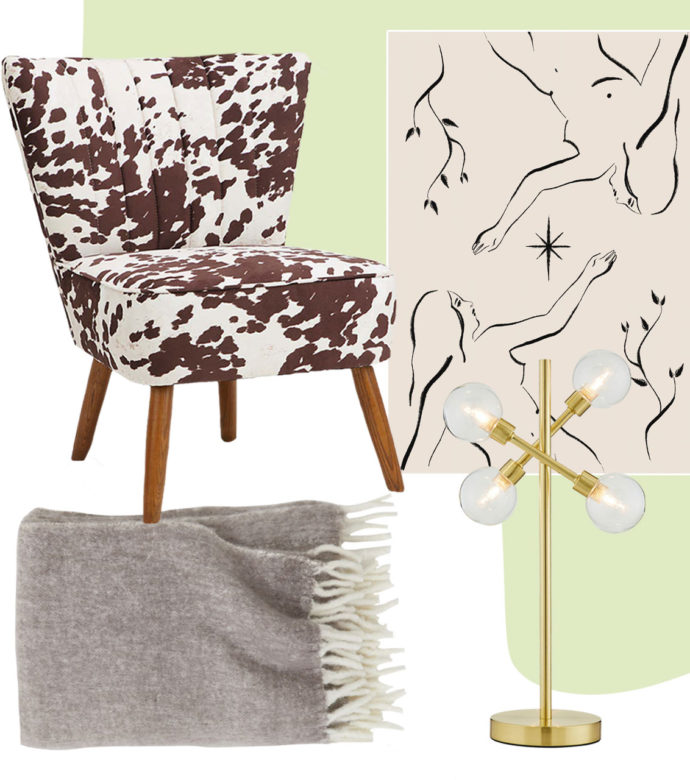
Having just moved house I think decorating and researching home bits is definitely getting me through lockdown, I’m glad I’m not spending as much money on board games and colouring pens as I did during lockdown 1.0! There’s so much you need to make a house a home but lighting and texture are key so I’m all about the lovely lamps, cosy throws and fun prints. I’m obsessed with this artwork by a Brighton based artist called Kit Agar it’s in my basket for payday and going over my bed!
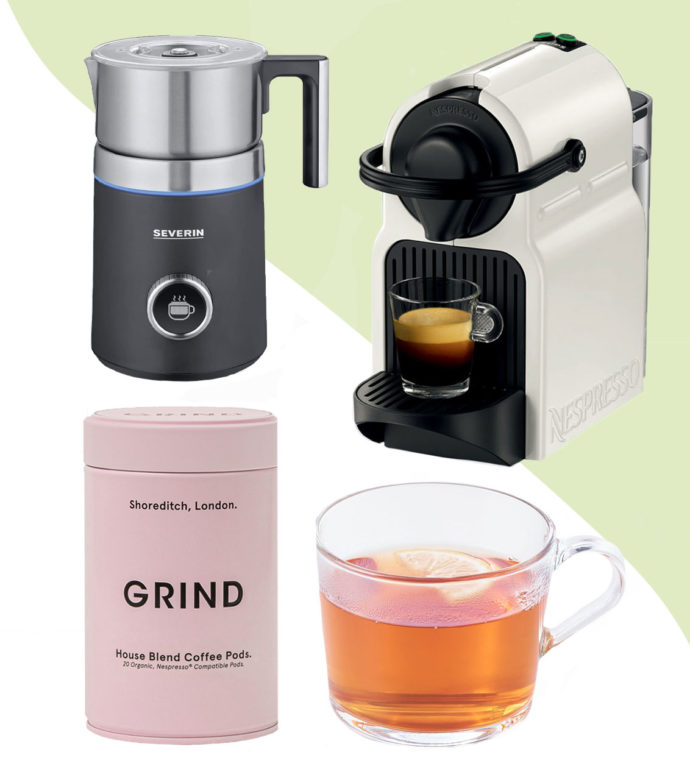
One of the main things that’s keeping me sane this lockdown is my DIY at home coffees. I’m trying to stay home as much as physically possible which means I’ve traded in my coffee shop runs for at-home alternatives. I bought a new milk frother which is the absolute bee’s knees and does SO much more than just give you creamy fluffy milk. In terms of coffee, Grind have launched a subscription for their compostable, plastic-free capsules – a much better alternative than the non-recyclable originals. I love making a fancy coffee in my see-through Ikea mugs so you can see all the different layers, it’s just so satisfying!
Spotlight on Chronic Illness – Learning about PCOS & Endometriosis
In this blog post, we shine a light on these under-discussed conditions, their symptoms and the treatment options available.
It is estimated that 1 in 10 people in the UK are currently living with Polycystic Ovary Syndrome (PCOS) and Endometriosis. Despite how common both these chronic health conditions are, there’s still a lot of misinformation and stigma surrounding their symptoms and causes.
Many people are misdiagnosed for years, feeling isolated, depressed, ashamed and disconnected from their bodies.
Wrongfully, they’re also often disregarded as not being a serious health issue due to lack of awareness among GPs, leaving many people misdiagnosed for years and feeling isolated, depressed, ashamed and disconnected from their bodies.
In this blog post, we shine a light on these under-discussed conditions, their symptoms and the treatment options available.
What is Polycystic Ovary Syndrome?
Polycystic Ovary Syndrome (PCOS) is a common condition caused by an imbalance of hormones including insulin and excess androgen (referred to as the ‘male’ hormones but these are present in all identities and vital for everyone’s normal reproductive function).
This hormonal imbalance affects how a person’s ovaries function, disrupting ovulation and the menstrual cycle. Each month, the ovaries make and release an egg as part of a healthy menstrual cycle. With PCOS, the high levels of insulin cause the ovaries to produce too much testosterone which interferes with the development of the follicles (the sacs in the ovaries where the eggs develop) and prevents ovulation from taking place as it should.
Symptoms
According to the NHS, more than half of the people affected by PCOS do not experience any symptoms but if they do, these become apparent during late teens / early 20s and can include:
Irregular or infrequent periods
Skin conditions such as oily skin or acne
Unexplained weight gain
Difficulty conceiving due to irregular ovulation
Excessive facial and body hair due to excess androgen (hirsutism)
Thinning hair loss on the scalp
Darkening of the skin particularly around the neck, groin and underneath the breasts
What causes PCOS?
The cause of PCOS is unknown however it is thought to be passed down genetically in families.
Treatment & Diagnosis
PCOS can go undetected for a long time because symptoms can vary from person to person and in some cases, there are no symptoms at all.
A diagnosis is usually made based on symptoms (often irregular or infrequent periods), blood tests and scans. Once diagnosed, you may be treated by your GP or referred to a specialist gynaecologist or endocrinologist to discuss how to best manage your symptoms, the recommended lifestyle changes and any necessary medication that might be right for you.
Although there’s no cure for PCOS, it can be kept in check with symptom-based treatment.
Although there’s no cure for PCOS, it can be kept in check with symptom-based treatment. It can often be treated with birth control pills because they contain hormones that address some of the common symptoms, but everyone’s course of treatment will vary, depending on their individual health risks.
Many people with PCOS manage their symptoms without medical intervention by exercising regularly and maintaining a healthy lifestyle.
What is Endometriosis
Endometriosis is the name given to the chronic and often debilitating condition where cells similar to those found in the lining of the womb grow outside of the uterus, such as the ovaries and the fallopian tubes.
These cells react to the menstrual cycle in the same way as those in the womb, shedding and breaking down each month, however, there is no way for this blood to leave the body which can cause inflammation, pain and the formation of scar tissue.
Symptoms
As with PCOS, the symptoms of Endo can vary from person to person. Some people experience mild symptoms, but others have moderate or severe symptoms.
According to the NHS, the main symptoms include:
Pain during or after sex
Pelvic or lower back pain
Severe period pain
Pain when passing urine
Discomfort with bowel movements
Constipation, diarrhoea, nausea or blood in your urine
Difficulty getting pregnant
Heavy periods
Bloating – known as ‘Endo’ belly
What causes Endo?
As with PCOS, the exact cause is unknown but theories do exist. The main one being ‘retrograde menstruation’ whereby the blood flows up the fallopian tubes and embeds itself in the pelvis rather than leaving the body as a period.
Treatment & Diagnosis
Getting a diagnosis can be a lengthy process (7.5 years on average) because the symptoms are similar to other common conditions. It’s classified into one of four stages of severity (I being minimal, IV being severe).
Tests to check for physical signs of Endo include a pelvic exam, ultrasound or MRI.
Tests to check for physical signs of Endo include a pelvic exam, ultrasound or MRI. In some cases, your doctor may refer you for a laparoscopy – an operation in which a camera is inserted into the pelvis via a small incision near the navel. If they see signs of endometriosis they can diagnose the condition and take a biopsy of the tissue for further testing. This is the most definitive way of diagnosing Endo. The surgeon can also perform excision surgery to treat Endo as part of the same diagnosis procedure which can relieve pelvic pain.
Currently, there’s no cure for endometriosis. However, symptom-based treatment can be given to help ease the severity of the pain, slow the growth of the endometriosis tissue and improve the quality of life for the person living with the condition.
When discussing treatment options with your GP, there are several things to consider. Your age, severity of your symptoms, whether you’re planning to start a family and how you feel about surgery.
Treatment usually includes pain relief (for mild cases), hormone medicines and contraceptives or surgery. Your doctor may recommend hormone therapy in combination with pain relief if you’re not trying to conceive.
Hormone-based treatment can include the combined contraceptive pill, patches and vaginal rings to help control the hormones responsible for the growth of endometrial tissue each month.
Hormone-based treatment can include the combined contraceptive pill, patches and vaginal rings to help control the hormones responsible for the growth of endometrial tissue each month. The contraceptive implant, contraceptive injection and Intrauterine Device (IUD) can also inhibit ovulation and the growth of the tissue, which may relieve some of the symptoms.
For those trying to conceive, your doctor may prescribe a gonadotropin-releasing hormone (GnRH) to stop the body from making the hormones responsible for ovulation, lower oestrogen and prevent menstruation. This artificial menopause causes the endometrial tissue to shrink. When you stop taking the medicine, your menstrual cycle returns but you have a better chance of conceiving. Both PCOS and Endo desperately need more awareness and funding so that those affected can get the appropriate help, support and treatment.
It’s not in your head, painful, debilitating periods are not normal, your health condition is real and chronic pain deserves validation.
We caught up with Michelle Dinnes who suffers from Endometriosis to understand more about her journey to diagnoses and what her life looks like now…
What first made you aware that you might have endometriosis?
The pain was extreme, I remember phoning my mum on way to the hospital in tears saying I would rather throw myself in front of a car than deal with this pain. Michelle Dinnes
It was the first day of my period in April 2015, I always got lower back pain in the first day or so and just took a few paracetamol to settle it down, I didn’t have any on me while at work and the pain started to become stronger and stronger to a point where I had to leave work and go to the walk-in centre at the hospital. The pain was extreme, I remember phoning my mum on way to the hospital in tears saying I would rather throw myself in front of a car than deal with this pain. I would class that pain as an 8-9 out of 10, for 90 minutes I sat in the hospital wanting to scream because the lower back and stomach pain was so intense it felt like someone had hold of my insides and my spine and was twisting.
Endometriosis has got one of the worst diagnosis records – how long did it take to get a diagnosis?
I have had an awful and not uncommon experience to get diagnosed, after my hospital appointment for my first symptoms I thought okay maybe it was a bad period but when it happened again the month after so I called my GP for an appointment. My appointment went well and I was referred to gynaecology, I went on to have an internal and external scan which showed clear (very normal for endometriosis), I had blood tests done that came back clear. I can’t remember when this was but I have a feeling it was April 2016 I was offered a procedure called a laparoscopy, this is a minor procedure that is done under anaesthetic to have a camera inserted to detect if there is any endometriosis, as I never had an operation I was apprehensive so asked if I could think about it, this was okay and had 6 weeks to decide.
A year later a friend told me about her endometriosis, so many of her symptoms were similar to mine so I decided to start the whole process againMichelle Dinnes
2 weeks later I made the call to agree to the procedure only to be told I was not on the hospital system, I was so upset and just gave up. A year later a friend told me about her endometriosis, so many of her symptoms were similar to mine so I decided to start the whole process again, this time with a very unhelpful gynaecologist. I had the scans etc only to be told there was nothing wrong and the gynaecologist didn’t believe my symptoms and didn’t want to help any further, I argued my way into having further tests however they all came back clear.
In October 2018 I had a scan of my bladder due to what I believed were constant UTI’s (turns out now that it was just due to my endo) there they found a small 5cm cyst on my right ovary. December 2018 I had another gynaecology appointment, this is where my gynaecologist told me there is nothing wrong with me and period pains are normal, painful sex is normal and cramps between period are normal (I am just going to add NONE of this is NORMAL) after telling her over and over that I suspect I have endometriosis she was refusing to put me forward for the procedure, this argument turned into a full-on screaming match which I then won, I was put in for the procedure and on 11th June 2019, I was officially diagnosed with endometriosis and adenomyosis.
Tell us a bit about the post-diagnosis process – did you have a positive experience with your GP / gynaecologist?
Since being diagnosed though things haven’t been much better, I have had every symptom possible now occur, I had to eventually seek and pay for private help as 14 months after my diagnosis I had not been seen and I was becoming worse. I found a lovely male gynaecologist who told me exactly what I was entitled to and my options. October 2020 comes and I see my NHS gynaecologist who told me she would not put me forward to have the endometriosis removed (this is only temporary as endo grows back) and she would only help further after a year of trying for children, wrote me a prescription for folic acid, discharged me and sent me on my way.
I am now booked in for an MRI scan to see where the endo has spread and when possible I will have the operation to have the current endo removed to try to conceiveMichelle Dinnes
Now endometriosis is well known for causing infertility and me and my partner are not yet ready for children so that was a big slap in the face, from then I contacted my GP and told them I wanted an appointment with the gynaecologist I saw privately as he does NHS appointments, took 3 wrong attempts but eventually I got an appointment with that gynaecologist, after seeing him I am now booked in for an MRI scan to see where the endo has spread and when possible I will have the operation to have the current endo removed to try to conceive once my partner and I are married.
Endo belly is just one painful reality of living with endometriosis, how do you manage your symptoms? (Treatment, lifestyle) managing symptoms can be a difficult one especially since some days I can take a few painkillers and rest and then there are days where I am in bed with 2 hot water bottles taking the strongest painkillers I have as often as is allowed to try and keep the pain at bay. The best thing is just listening to my body, I need to rest, I need my hot water bottles and my painkillers.
What is a typical day in the life of someone living with this condition?
I could go deep into this but based on my own experiences every day is different, I am very fortunate that some days I can go about my day and get on with things as if nothing is wrong, more often than not though that isn’t the case. Most days I am going about my day with my stomach cramping up, I am tired from the fatigue and the brain fog is awful. Most my days are spent being uncomfortable, in some sort of pain and being tired however somewhere along the way its become my normal and I just get on with it, keeping in mind these are the better days. The bad days are where I am in bed or on the sofa in so much pain I don’t know what to do with myself and using hot water bottles and pain killers.
What’s the biggest misconception about Endo?
There are a few but the most common one would be that a hysterectomy is a cure, there is no cure for endometriosis. Some people are lucky and have experienced less or no symptoms after having one then there are the ones who aren’t so lucky and still have all the symptoms. Endometriosis can occur anywhere in the body and no just the uterus therefore removing the uterus does not cure it.
Another misconception is that having a baby will cure itMichelle Dinnes
Another misconception is that having a baby will cure it, some people have found that their symptoms have become easier after having a baby and then there’s some who have not been as fortunate, I have actually had 2 people at work tell me their friends cured there’s by having a baby, I’ve even had a gynaecologist tell me this which honestly shocked me that they are giving such hugely false information.
How has Endo affected your mental health as well as your physical health?
I have had depression and anxiety since a young age but feel the endometriosis has contributed to this, sometimes I will sink into my depression when things with my endometriosis are bad, I find it affects my anxiety more so though as when I try explaining things to people I start wondering if they think I’m lying or exaggerating or especially when I’ve had to call in sick for work that they don’t believe I am as bad as I say.
What’s the hardest thing about having an invisible, often misunderstood condition?
The hardest thing is the doubt it puts in your mind, you have to talk to people about it, you have to explain it to your managers at work and I could look fine but be in extreme pain and there’s me saying I need to go home from work. There’s trying to explain to medical professionals what you’re going through and not knowing exactly what words to use or what exactly to say to get through to them how it is. The worst thing is people having the misconceptions so just shrug it off like oh well it’ll be fine once you’ve had children, or the yeah I get really painful periods too. No one can really understand conditions until they have it or they can see it.
What do you think needs to be done to drive awareness, education and change?
Conditions such as mine should be taught in sex education at school because I did not know anything about any conditions until I started realising what I had, we should not go through life thinking that painful periods, heavy periods etc are normal.
What does having Endo mean to you?
It means spending a lot of my time getting the right medical care, most of my journey has been me telling doctors and gynaecologists what I need and then has been a fight to get it. Endometriosis is spending most of your life in pain and just having to learn to live with it. I hope I’ve answered that questions correctly, that was kind of a hard one.
What’s your go-to self-care ritual?
Personally, I have found regular exercise has helped me as well as eating healthier and cutting out meat and dairy. Having a chronic illness isn’t just about having days where you relax and do nothing is about listening to your body and trying new things until you find something that helps you.
Something you’d like all Endo warriors to know…
Endo warriors/sisters you are not alone, we are all in this together and we are all here for each other. Some days we feel like we want to give up or can’t keep going but we have got through it this far and that shows how extremely strong we are, we can keep going we have got this!
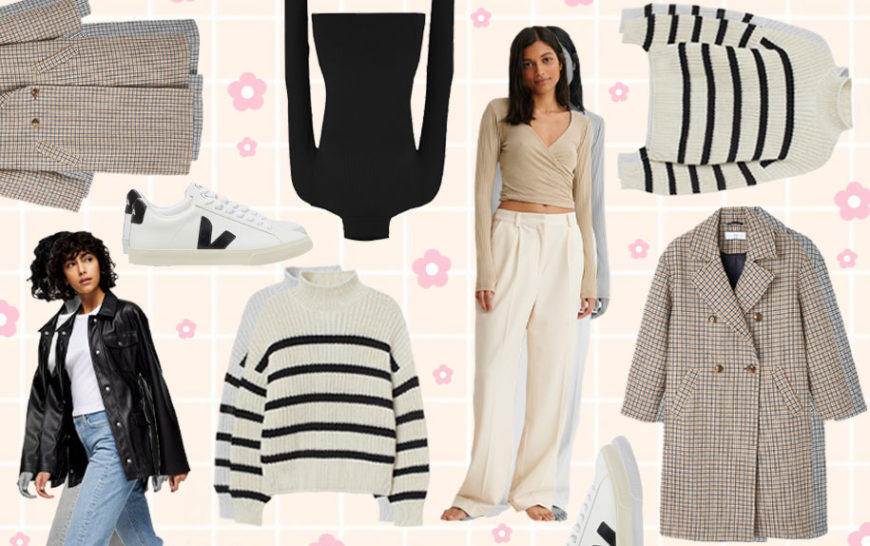
In the spirit of Kate Nash and the importance of strong foundations, the skeleton of your wardrobe is where it’s at for guaranteeing you never have another ‘I have nothing to wear’ moment again.
In the spirit of Kate Nash and the importance of strong foundations, the skeleton of your wardrobe is where it’s at for guaranteeing you never have another ‘I have nothing to wear’ moment again. And whilst it might seem boring to invest in the neutral, plainer items that don’t thrill you as much as a funky leopard print number, nailing the basics gives you the option to switch in trend-led items quicker than you can press ‘add to cart’- now that’s savvy shopping if we ever did see it!
Depending on your individual style preferences, the exact essentials you opt for may differ, but regardless, your basic items will serve to compliment your personal style as it grows both through trends and general lifestyle changes.
Depending on your individual style preferences, the exact essentials you opt for may differ, but regardless, your basic items will serve to compliment your personal style as it grows both through trends and general lifestyle changes. Not only will nailing your wardrobe essentials help you to get dressed more efficiently on a busy morning (oh for the days when we used to leave the house), but it will also help you cut down on the £40 here and £60 there high-street orders that happen every once in a while but never seem to add much va-va-voom to your rail …
It really is as simple as that! Jeans that hug you perfectly, classic tops that can be layered or worn alone all year round, timeless outerwear in the form of a trench or leather jacket, white shirts that can be dressed up or down, ankle boots, trainers and heels you know you won’t need to buy Compeed for, and you’re well on your way to capsule wardrobe perfection!
Come On In, The Water’s Lovely! The Benefits Of Winter Swimming
With more and more people stoically dipping their toes into the hobby, we thought we’d look into the key benefits of bracing an outdoor dip.
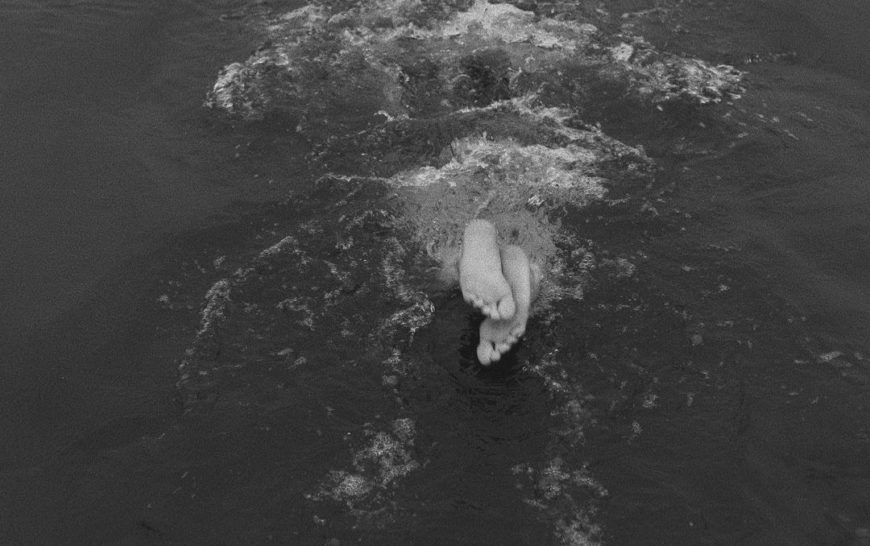
Whilst submerging yourself in 10-degree water might not be everyone’s idea of winter fun, cold water swimming has surged in popularity during the pandemic so much so, it’s become something of a lockdown cliché with everyone wanting a bit of this natural high.
Water, particularly the sea, has a way of reminding us that we’re all part of something much bigger than us
For many people, cold water swimming has provided a sense of solace and escapism during a time when everything on land went a tad tits up. Water, particularly the sea, has a way of reminding us that we’re all part of something much bigger than us and that whatever personal challenges are ahead of us or behind us, it’s comforting to know the existential problems we face are quite literally a drop in the ocean.
With more and more people stoically dipping their toes into the hobby, we thought we’d look into the key benefits of bracing an outdoor dip.
It’s group therapy
Whether you’re wild swimming in lakes, sea swimming or putting in the lengths at your local lido, there’s a great sense of community and camaraderie amongst cold water swimmers.
The aim here is to tend to your wellbeing and enjoy the profound effect that swimming outdoors has on your mental health.
You’re all there for your own reasons but you’re all rooting for one another and that shared experience can be transformative for your mind, body and soul. No one’s interested in competitive swimming or smashing PBs, the aim here is to tend to your wellbeing and enjoy the profound effect that swimming outdoors has on your mental health. That’s it. Bottom line.
From letting go of your inhibitions and dicking about with your pals for a few minutes to sinking a cup of tea on the beach in that blissful post-swim euphoria, a lot of the benefits of winter swimming happen outside the water as much as in it.
The mental calm & clarity
Being in the water, particularly when it’s cold, fosters here-and-now-thinking because your brain has limited bandwidth to think about anything other than the sensation of the cold water and its natural stress response. It anchors you in the moment and offers mental clarity as well as physical weightlessness, which is why it’s arguably one of the best ways to switch off, de-stress and enjoy a 10/10 digital detox. So, to summarise, blue views should be available on prescription.
Image Credit: @LareeseCraig
It’s great for your circulation
Swimming in cold water causes our heart to pump more blood to our organs, increasing blood flow throughout the body, flushing out toxins and improving circulation.
It boosts your immune system
The initial shock of entering the water kick starts the body’s stress reaction, triggering an increase in white blood cells and boosting your immune system. On regularly immersing yourself in cold water, your body becomes even better at activating that shock defence.
The blue buzz is electric
There’s one consistent and indescribable benefit you’ll hear every cold water swimming evangelist waxing lyrical about and that’s the great buzz.
For many, the feeling of being in contact with the water can evoke memories of free-spirited days spent on the beach as a child, for others it can offer relief from emotional or physical trauma and pain, either way you don’t need to be the next Wim Hof ice man to believe that the blue mind hype is real.
Betty Lewis-Griffiths, a trainee breath facilitator and Brighton mermaid, started sea swimming regularly last year and never stopped. It’s since become her go-to energy shaker, offering her year-round equilibrium, joy and peace.
Coldwater swimming helps me feel grounded because what better way than connecting with the elements than being in them! In the same way that a walk in the woods is soothing and gives you a fresh lease of life, cold water swimming injects me with life and I feel like I can do anything afterwards (once I’ve warmed up!). It makes me feel all the emotions. There isn’t anything that compares. I feel alive, at peace, grateful, full of love and deeply connected to nature. When you’re swimming in the sea into the horizon with the sun setting, there is no other feeling like it and everything else just melts away for those moments.
Betty Lewis-Griffiths
Well, that’s us sold!
Image Credit: @LareeseCraig
The mental challenge is exhilarating
It’s cold water. Of course it will be chilly but that’s as bad as it gets, right? Once you break through that mental wall, you can quite matter of fact about the idea of willingly getting your body in the water for a few minutes, which then unlocks this huge sense of achievement and fulfilment once you’ve proved to yourself that you’re resilient and capable of pushing through discomfort.
How to stay safe when cold water swimming
Chilly water swimming can be restorative, healing, invigorating, joyful and everything in between but it is not without its risks, especially if you’re trying it for the first time.
Knowing your limits, staying safe, understanding the hazards and preparing with layers, a hot water bottle, a woolly hat, neoprene booties and a steaming flask of tea is key.
Acclimatise to the temperature gradually by easing your body in slowly and in a controlled manner
Avoid jumping or diving into the water as this can cause cold water shock and gasping of breath. Acclimatise to the temperature gradually by easing your body in slowly and in a controlled manner, always allow your breathing to settle before swimming and stay in the shallows where you can touch the floor or get out if you need to.
Everyone’s cold tolerance and swimming ability is different, depending on how much sleep you’ve had, what you’ve eaten that day, stress and recent acclimatisation, so don’t compete with what other people can endure. Stay in your lane!
Always check tide times and conditions ahead of swimming – the sea will dictate if you can swim or not. Sometimes wave bathing on the shoreline (or pilcharding as it’s known locally) is just as exhilarating as a full swim.
If you get into difficulty in the water, remember the ‘float to live’ survival advice – fight your instincts to flap in the water, get onto your back, extend your arms and legs into a star fish position until you can control your breath before calling for help or swimming to safety, if possible.
Image Credit: @LareeseCraig
How to warm up after your swim
Afterdrop refers to the physiological response to being in cold water. When you swim, your body shuts down circulation to your skin and pools warm blood in your core to help you stay in the water for longer. As you emerge from the water and start to warm up, blood starts to recirculate and your core temperature drops which can lead to shivering, hyperthermia and dizziness.
Throw on lots of layers promptly including a hat and gloves and heat your core with a hot drink and a sugary snack.
Your body temperature will continue to drop for up to 10 minutes once you’re out the water so, dry off by patting your skin rather than rubbing, throw on lots of layers promptly including a hat and gloves and heat your core with a hot drink and a sugary snack. Lots of experienced cold water swimmers also swear by Haramaki, a traditional Japanese core-warmer.
To minimise the risk of afterdrop, remove wet layers asap, get dressed immediately and, as tempting as it is, resist the urge to jump straight under a hot shower when you’re home as this can draw the warm blood away from your core at speed, leading to rapid-cooling as your body temperature and blood pressure drops.
If you have a heart condition or asthma, it’s best to sit this one out and get back in when summer rolls around.
Will you be getting your cold water fix this winter?
A total sweetheart who makes content that guarantees to draw a smile, few online content creators are as charismatic and engaging as Mark Ferris. We caught up about how he's managed to stay so motivated over three lockdowns and find out what he's currently working on...
First of all, Happy New Year! What are you looking to get out of 2021?
HAPPY NEW YEAR! I’m just hoping that this year we can get back to normality and that I get to see my friends more. And that everyone stays safe💘
Can you talk us through your career online and how it’s evolved?
Well, I started off filming fun challenges on my channel 5 years ago and to this day I still love doing exactly that. I don’t think my channel has really evolved. However, me as a person has! I’m definitely more open & honest & carefree!
Can you tell us a bit more about what content you create and upload on which platform?
I think when I first started I was very ‘challenge’ heavy content-wise on YouTube, then I went down the more chilled sit-down type of videos advice/story times/q&as, then I moved on to vlogs, and now I focus more on the challenges again because they keep me the most active and I love them. I’ve also started to daily vlog (sort of) on Instagram more! I just find the immediate connection I can have with viewers just amazing!
What are your top tips for staying motivated during the pandemic?
DONT PUT PRESSURE ON YOURSELF! Remember that we’re all going through it together and reach out for help if you need it. I always recommend getting up earlier than your alarm goes off! Make a little to-do list the night before. Get as much fresh air as you can. Focus on the hobbies and things that make you happy and inspired. And if you feel up to it; try something new🥲
A lot of our audience will know that you are Zoe’s best friend, how have you two managed your friendship this year without being able to see each other in the same way?
We text endlessly haha! We’re always sending each other something that’s funny or something that reminds us of each other. Obviously, we’ll do check-ins with each other to see how we’re getting on. We like to recommend each other shows & movies and we often send clips from our videos together to lol at haha! Also a LOT of voice notes!
What would you say is your biggest achievement to date?
I think the fact that I accomplished what I set out to be after Uni! Never did I think I’d meet the friends I have and get the most perfect audience! It’s insane & cringe but I’m definitely living my dream!
What are you currently working on?
My mental health haha! Making sure I’m putting me first in situations & looking after myself! Also, fingers crossed a couple of things come true for this summer which I can’t mention yet- SORRY
Who are some of your favourite follows online?
I love being nosey with my friends obvs and seeing what they’re up too! OBSESSED with interior design & life hack pages!
If you weren’t an online content creator what do you think you’d be doing for a living?
I’d love to be a party planner organiser! For sure! Just sitting down with people and organising parties and events! There’s still time 😉
What do you always carry with you?
My inhaler, anti-bac, lip balm and some sort of fragrance😂
What does your perfect weekend look like?
It used to be pre-drinks with mates and hit the clubs haha, now it’s a cosy bath, Netflix and takeaway and a new set of jams
If you could only eat one meal again what would it be?
Fully loaded Nachos! Key to my heart!
If you could give one positive message to our followers what would it be?
We're clinging onto everything that feels normal and comforting and sometimes that comes in the form of an online order delivered straight to your door.
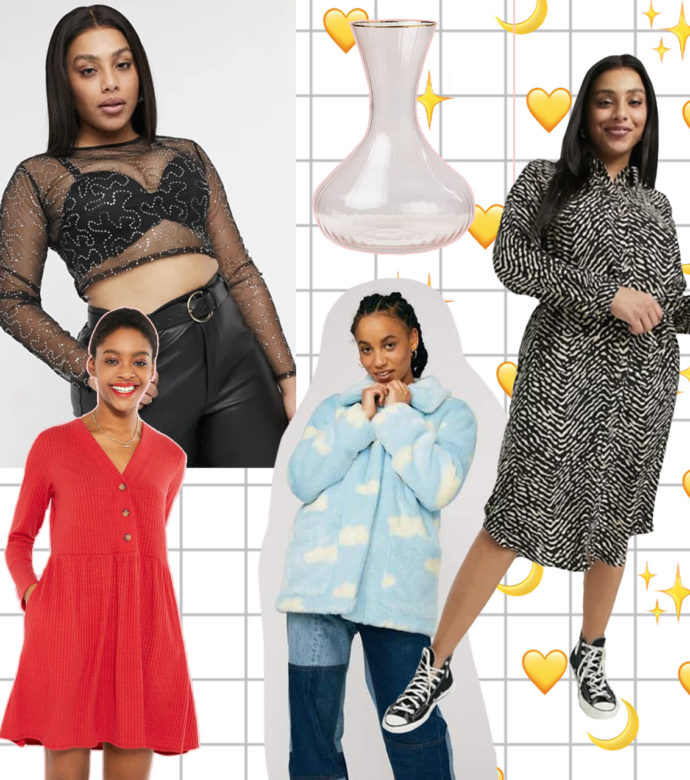
We might still be hibernating in lockdown 3.0 but a little scroll of ASOS never hurt anyone, right?! A new year means new trends and new intentions, so a haul that dips into the latest lust-worthy items or a couple of old favourites (yes we STILL can’t stop buying loungewear) might be just the ticket for brightening up this dull ol’ month.
No matter the circumstances, there can still be happiness found in putting on an outfit you feel 10/10 in, blow-drying your hair and drinking some bubbles on the weekend.
Lockdown has shown us the items we really can’t live without and the small joys that can come from indulging in some retail therapy every now and again. No matter the circumstances, there can still be happiness found in putting on an outfit you feel 10/10 in, blow-drying your hair and drinking some bubbles on the weekend- we refuse to give up the feel-good rush that signifies the end of the working week and time to relax, albeit it still sat on the sofa. And why not spice up with the day with a brief interaction with your DPD driver and faux haul unboxing with your flatmate or unwilling S/O?!
We’re clinging onto everything that feels normal and comforting and sometimes that comes in the form of an online order delivered straight to your door.
Lareese
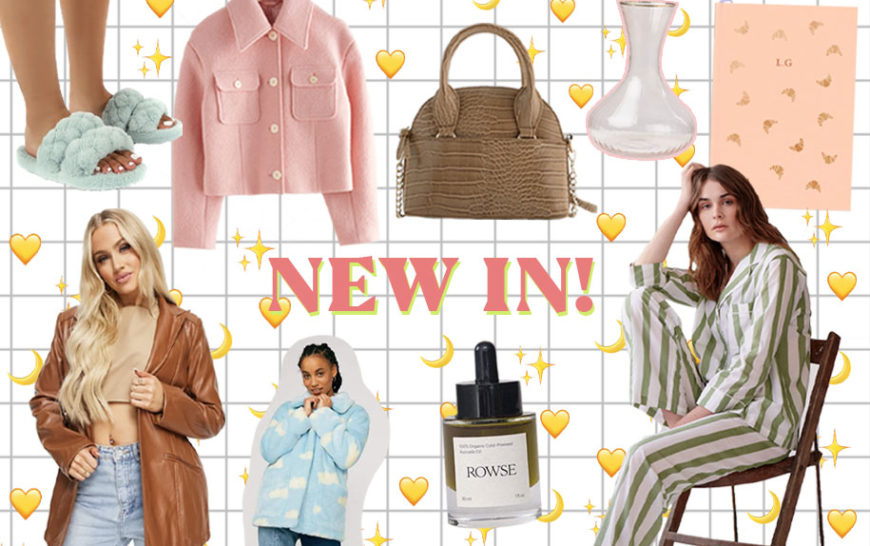
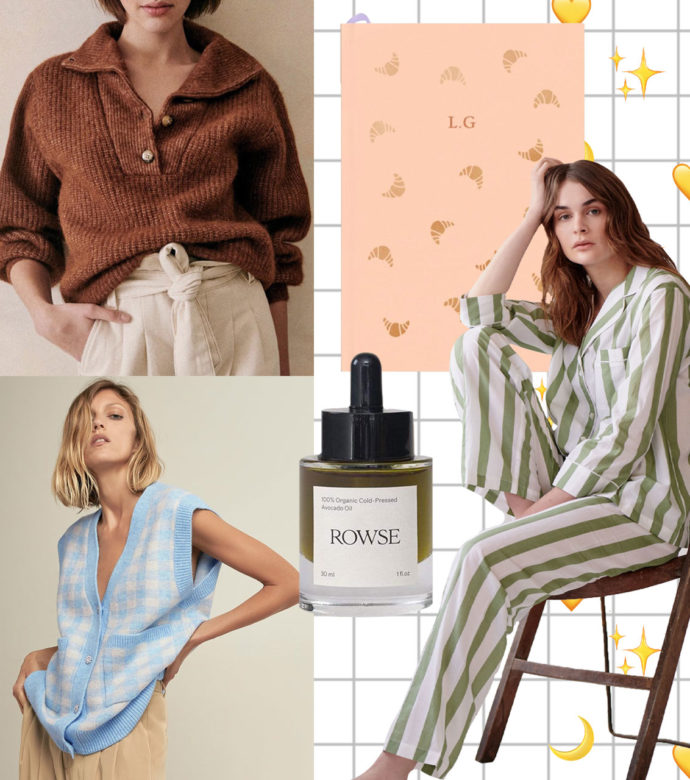
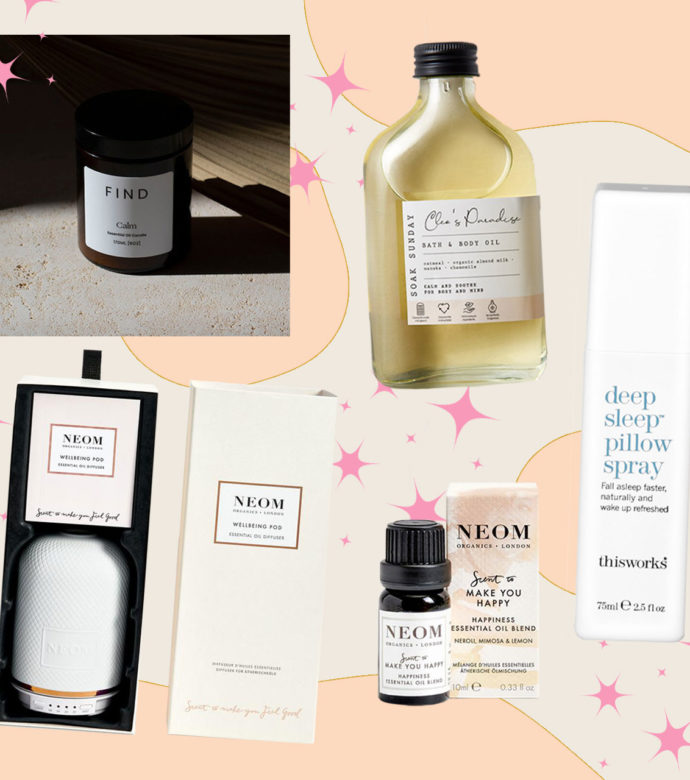
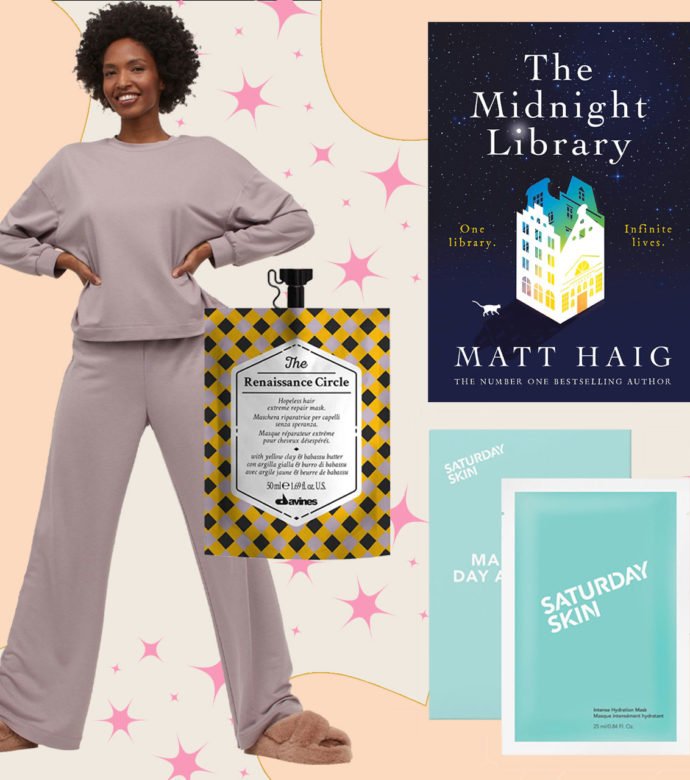
Don’t mind me, I’m just over here trying to fill a gaping void called lockdown 15.0. Forgive me, emotions are high and therefore I need a notepad with croissants on it. I’m dedicating this round of Weekly Wants to anything that puts a smile on my face so I’ve gone for a right ol’ mix of fancy PJs (I just got deja vu from like, the whole of 2020), fancy face stuff and fancy stationery. All to be seen and appreciated by no one other than the living room. What a flaming liberty.
Lockdown 3.0 has definitely sent me on a spending spree, packages arriving at my door are the most exciting thing in my life right now. I am loving neutral tones (as per), so I’ve picked up a few sweatshirts and long-sleeved tops in brown/beige shades. I also found the cutest bag on Zara and just had to buy it! Gives me Balenciaga on a budget vibes. Tik Tok heavily influences my shopping habits and there’s a cloud jumper I’ve seen doing the rounds so I purchased that baby once I tracked it down on ASOS.
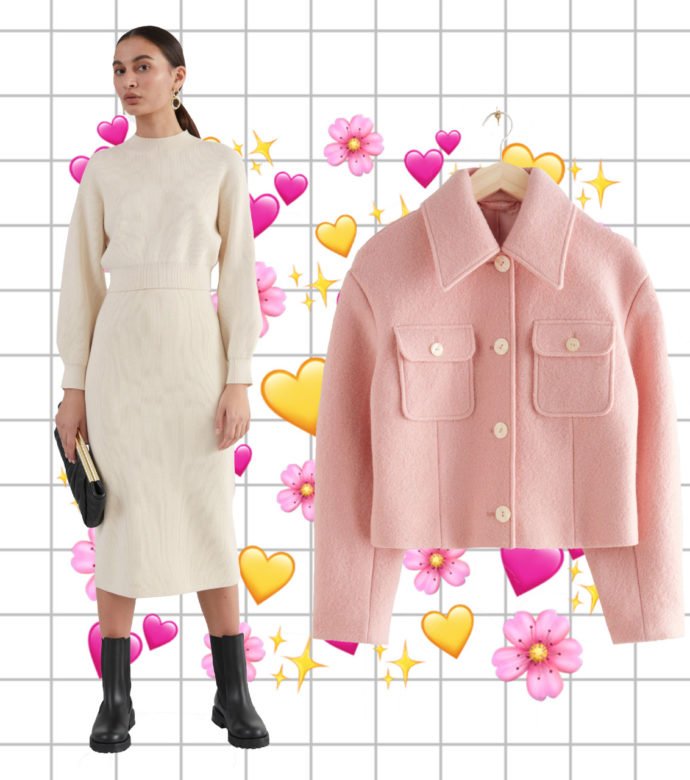
I love this little set by & Other Stories and after buying some lovely jumpers from there before Christmas, you just can’t argue with the quality of their garments. Super cute but also cosy, ready for when we MIGHT leave the house and see people in the next three months….
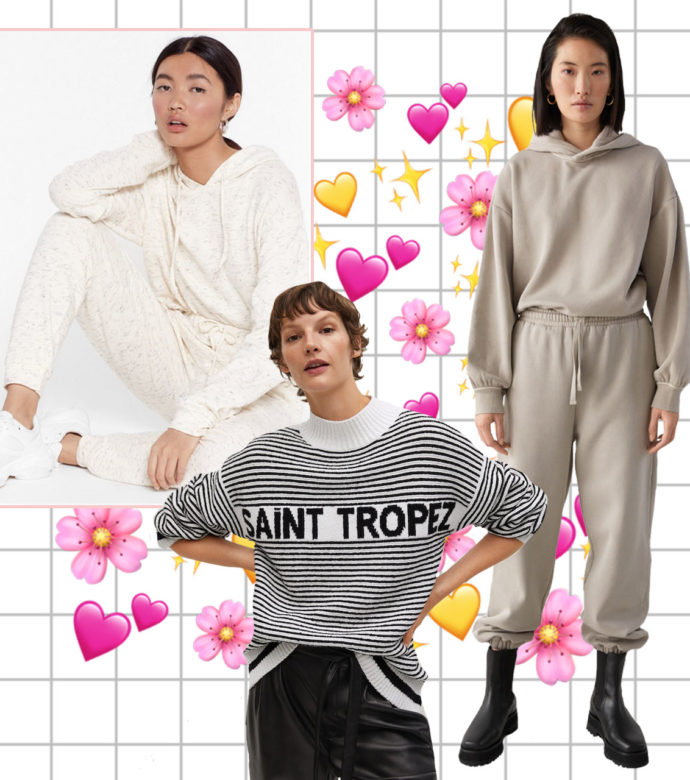
Like most of us, I am still living in knitwear and loungewear and I must say have been really tempted to buy a few new pieces I’ve spotted recently, especially as it’s been SO chilly lately. I’m trying not to go too crazy though as by the time we’re let out in the real world it will probably be Spring and we will be shedding our layers again!
I’m not normally one for spending money in the New Year, but I’ve got nothing else to spend my money on this January so let’s go wild. I still need to buy some furnishings for my new home and sort out my spring wardrobe so there’s a few things I’ve got my eye on! This cloud coat from skinnydip, I have the strawberry one already and it is the warmest thing ever. You can’t have too many statement coats, can you?! Vase because I’m manifesting being brought loads of flowers in 2021. And lots of clothes and accessories for all the fun places I’m going to be going.
I’ve barely been shopping at all during the pandemic but on the occasions when something does catch my eye, I like to make sure there’s longevity to it and that I’ll immediately get my wear out of it! Slippers, socks and comfy underwear definitely fit into that category and are much appreciated as we carry on working from home. Nice top half items are also justifiable in my eyes as you can never have enough Zoom appropriate items to hand!
Whether you’ve been a victim of revenge porn or you’re here to read up on your rights so you know exactly how to handle yourself, this blog post details everything you need to know.
Since the advent of social media, online dating and instant messaging, sending and receiving videos and pictures has become an intrinsic part of how we live our lives. Sharing videos and photos has never been easier nor more instant, and whilst modern technology has its benefits, it undoubtedly has an ugly side too, cyberbullying, upskirting, sextortion and revenge porn to name a few.
Once someone you’ve been intimate with has a nude or semi-naked photo or video of you, it’s increasingly difficult to control where it ends up, especially if that relationship breaks down or ends on less than amicable terms.
The BBC recently reported a surge in cases, with campaigners suggesting the crime has been exacerbated by lockdown.
Revenge porn – the act of distributing non-consensual sexual material on the internet – can have devastating and far-reaching effects on the victim’s mental health. Since legislation in 2015, it has been illegal to share such content both online and offline, however, the BBC recently reported a surge in cases, with campaigners suggesting the crime has been exacerbated by lockdown.
The dedicated Revenge Porn Helpline reported a record number of calls in August 2020 with two-thirds of reported cases involving women, whilst research by domestic violence charity Refuge showed that one in seven young women have been threatened with sharing intimate photos or film without their consent. Lisa King, director of communications and external affairs at Refuge said, “Threatening to share intimate images isn’t yet a crime which means millions of women have been controlled and coerced by their abusers and are made to live with the fear that this may happen to them.” Refuge is now calling on the government to change legislation to give victims the protection they need.
All of this is evidence enough that revenge porn is shockingly common and we still need to keep the conversation going to drive further legislation and awareness of this appalling crime.
This is image-based sexual abuse not a bit of kinky fun and private images should stay private. Whether you’ve been a victim of revenge porn or you’re here to read up on your rights so you know exactly how to handle yourself, this blog post details everything you need to know.
What exactly is revenge porn?
Revenge porn, also known as intimate image abuse and non-consensual pornography, refers to the sharing of private intimate content, either videos or photos, without consent and with the intent to cause distress. It applies both online and offline and includes showing someone a physical or electronic image, uploading it to the internet or sharing via text message, email or other instant messaging apps. Most victims are women but it’s a crime that affects every gender identity.
Most victims are women but it’s a crime that affects every gender identity.
Sexual material or intimate content doesn’t just refer to explicit images or footage showing genitals but anything the person would consider to be sexual, including posing in a sexually provocative way or performing a sex act.
What does the law say about revenge porn?
In England, Wales and Scotland revenge porn was made a criminal offence under the Criminal Justice and Courts Act 2015. If you are found guilty of the offence, you could be prosecuted and sentenced for up to two years in prison.
As part of a new Law Commission review around online abuse, revenge porn victims could also be granted anonymity, so they can no longer be named publicly. Currently, revenge porn is classified as a communications crime meaning victims are not granted the same automatic anonymity as victims of sexual abuse. It will also review whether cyber-flashing and deepfake pornography (when an individual’s face is superimposed onto pornographic content and made to look and sound realistic) should be criminalised. The ministry of justice is due to report back later this year.
What to do if you’re a victim of revenge porn…
Report it
If someone has shared a private sexual video or image of you without your consent, you can report this to the police by dialling 101, if it’s an emergency and you’re in immediate danger, dial 999.
You can also reach out to The Revenge Porn Helpline – the UK’s only service dedicated to supporting adults who have been the victim of intimate image abuse.
You can also reach out to The Revenge Porn Helpline – the UK’s only service dedicated to supporting adults who have been the victim of intimate image abuse. The dedicated helpline was established in 2015 alongside the legislation that made sharing intimate photos and videos without consent a criminal offence. Their committed team of helpline practitioners give 1-1 confidential advice and support on everything from social media community guidelines, content removal and what evidence you need to gather when reporting the crime to the authorities as well as legal advice. They can also give confidential advice on upskirting, threats to share intimate images and webcam blackmail (sextortion).
Due to current covid-19 restrictions, The Revenge Porn Helpline is operating an email-only service, open Monday – Friday 10am-4pm. Reach out here: help@revengepornhelpline.org.uk
Keep all the evidence
Always take screenshots or print hard copies of the content where it’s been shared/posted (social media, website, email) or any communication threatening to share said content. Once you’ve reported the intimate content for violating community guidelines, social media sites can take it down pretty quickly. Make sure you’ve always got the proof.
Tell your friends & family
While this egregious crime might make you feel like hiding away, this is absolutely not your fault and you definitely don’t deserve to carry the burden. Someone did a sh*tty very illegal thing to you. They violated your body and your trust and that’s on them.
Someone did a sh*tty very illegal thing to you. They violated your body and your trust and that’s on them.
Opening up to your close friends and family about what’s happened to you and explaining that you’ve been a victim of internet crime (let’s call it what it is) will help alleviate the humiliation and prepare them, should they see the content on the internet or social media unexpectedly. It’ll also help give them the heads up, so they can be there for you and respond sensitively.
Get ongoing help & support
Remember to focus on the things you can control in this situation, know your legal rights and be compassionate towards yourself. The only person you or anyone else should be judging is the perpetrator. If you’re struggling with your mental health or find yourself internalising feelings of shame or accountability, consider speaking to a therapist who specialises in sexual trauma. You’re not alone.
Let us introduce: 'Regencycore'. Similarly to Cottagecore in its TikTok and Instagram origins, the phrase was coined following the influence of Netflix's latest hit Bridgerton, which has seen the appetite for period drama inspired fashion skyrocket.
Between Bridgerton, The Crown and The Queen’s Gambit, it’s clear that the escapism we seek from an evening of Netflix has transcended beyond simply a different reality, but to a different time period altogether. Let us introduce: ‘Regencycore’. Similarly to Cottagecore in its TikTok and Instagram origins, the phrase was coined following the influence of Netflix’s latest hit Bridgerton, which has seen the appetite for period drama inspired fashion skyrocket.
From empire waistlines to pastel hues, pearl headbands, lace detailing and corseted silhouettes, it’s the ultimate throwback in romantic, whimsical dressing.
From empire waistlines to pastel hues, pearl headbands, lace detailing and corseted silhouettes, it’s the ultimate throwback in romantic, whimsical dressing. Decadence is the key here- minimalist, scandi dressers look away because this trend is rooted in more being more. And whilst it might seem that there are limited occasions with which you can get away with a pearl detailed blouse or renaissance inspired corset, the magic of regal dressing can be found in the small details synonymous with the trend that can be subtle but instantly recognisable.
According to fashion intelligence outlet Lyst, searches for Regencycore fashion have gone wild following the Internet’s Jane Austen worthy love affair with Bridgerton, as searches for corsets were up 123%, pearl and feather headbands up 49%, long gloves up 23% and empire line dresses up a whole 93%. It’s clear that it’s not just the Duke and his spoon that have made a lasting impression on viewers.
Regencycore is reigning over the fashion world in 2021, and if it means an excuse to rewatch Bridgerton for the second (read: fifth) time running then so be it…
Here, we speak to five people about their stories and what adopting has meant for them, as well as some of the invaluable advice they’ve picked up along the way.
Biology has very little to do with a parent’s capacity to love and care for a child and there are more ways to mother a child beyond carrying one in your own body.
It can also be the most incredibly enriching life experience.
Adoption can quite literally change the course of a child’s life and whilst the process can be an emotional rollercoaster of a journey, it can also be the most incredibly enriching life experience.
Here, we speak to five people about their stories and what adopting has meant for them, as well as some of the invaluable advice they’ve picked up along the way.
Marri
Marri adopted her daughter Ellie when she was 18 months old, she’s now 5.
Where did you start with the research process and deciding which adoption agency / local authority to go with?
I have a close family friend who is a retired social worker. She talked me through the process and gave me the contact details for my own local authority and the two neighbouring authorities. There will be support services local to you depending on where you live, so I contacted Scottish Adoption and read over all the information available. I ended up going with a local authority near me, and they were excellent.
What was your biggest motivation for adopting a child?
I’ve wanted to be a mum all my adult life. I wasn’t fortunate enough to meet someone who also wanted to have kids, so adoption felt like an empowering way for me to take control of that. As soon as I made the decision to embark on the adoption process, my determination to be a mum went to a new level. This was no longer about my need to be a mum. This was about a child who needed a mum.
Can you talk us through what to expect from the adoption process? (Timescales, interview questions, training, first introductions, the matching panel)
My telephone enquiry led to a visit from a social worker for an initial assessment and to complete paperwork. As a single adopter, I asked if my mum could be present during the visit. I still smile when I think back to that night. My mum showed the social worker my spare room and even told her I was a good baker! She basically gave me a glowing reference. I felt so emotional seeing how badly my mum wanted this for me too, and proud to have her unwavering support. I really liked the social worker who did that initial visit and hoped I’d get her allocated to me. As luck would have it, I did, and she was amazing.
The next step was to attend preparation groups. These classes took place over a number of weekends. They covered a lot of detail about what to expect from the process – it was a ‘warts all’ approach, covering the importance of acceptance, risks of known and unknown health conditions, connection, heritage, discrimination, preconceptions, prejudice. I was the only single person in our group. I remember sitting in my car on the morning of our first class watching all the couples walking in, taking hands, arms round each other. I buckled and called my best friend. She told me to walk in there with my head up and keep my eyes on the prize. I met some good people in that group, including a couple from the same town I live in. We made friends instantly, we’ve been close pals ever since and now our daughters are best friends.
After the preparation groups, I was allocated my social worker, Joanne. She had my back from day one and I had complete faith in her, which is crucial when you are bearing your soul to someone, as happens when you enter the next stage of the process – the paper work. As an adopter, single or a couple, you need to complete a form which speaks to who you are, what your motivations are, your family, your upbringing, your views, your ability to cope with life’s transitions, your resilience, your support networks. No drawer is left unturned, no skeleton is left hiding in the cupboard behind far too many pairs of shoes. When you tell people about this part of the process, they seem quite appalled; ‘it’s terrible you have to do all that when most people can have a baby without batting an eye’. I never viewed this part of the process as anything but necessary, essential. I also made a decision to see it as cathartic; a healthy reflection on who I am, and what I have to offer. The completion of the paperwork took place over the course of a year, in my case. Some of the form was written by my social worker following in depth conversations, some of it I wrote myself and submitted. My parents and some very close friends also submitted personal references. I had to attach a photo of myself to the form. Scrolling through my phone, I realised I didn’t have many which didn’t have me holding a cocktail. A work friend took a picture of me sitting at my desk, smiling, scared, determined. My daughter will read this form one day and I hope it makes her feel proud.
The next stage is the panel for approval, and then it’s a waiting game. For many adopters, they view that panel approval as being the positive pregnancy test. You know you will be a parent, but in this way, there is no gestation period. It’s all in the hands of your social worker, and the social worker of a child in ‘permanency’, to make that match. Six weeks after I was formally approved, my social worker rang me to say she had a file for me to read. It was a baby girl who had just turned one year old. I will never forget that phone call as long as I live.
My social worker sent me the file to read and followed this up by texting me a photo of the baby girl. It had been taken on her first birthday, only two months prior. Her big blue eyes, her wee face, I knew the second I saw that photo she was mine.
My social worker visited me with my daughter’s social worker, and from there we were formally matched. I set to work. A buggy, a cot, toys, clothes – many, many clothes, books, more clothes, adoption leave from work, savings cashed in for adoption leave, nights out with my friends before it was ‘all over’, more clothes but this time for me – what look would I go for now I was going to be a mum? Goodbye, high heels – hello, high tops. I was ready.
I was able to connect to my daughter’s foster carer, Elizabeth, via my social worker, so in the 3-4 months between the match and our introduction, Elizabeth and I met for a coffee and swapped numbers. She sent me photos and videos every week, and it really helped me to connect to my daughter before I’d even met her.
It was so important to me that the transition period was as smooth as possible for my daughter, who had already been through a lot in her 18 short months on the planet. I slept with a teddy bear every night for two weeks before we met to get my scent onto something comforting for her which her foster family gave to her before our introduction week. I also found out what type of washing powder her foster carers were using so I could buy the same and try and maintain some familiarity for her.
The night before our introduction day was surreal. Three years after I picked up the phone to the local authority and asked that question – ‘can single people adopt’ – here I was, preparing to meet my daughter in the morning.
I knocked the door, and in I went. There she was, sitting on the floor, playing with her toys. There she was, my girl.
What criteria must you meet before you can adopt?
In Scotland you have to be over 21, but other factors are taken into consideration, such as having a spare room, healthy and fit enough to care for a child, and not banned from working with/being around children.
Meeting a panel of independent experts to discuss whether the applicant/s should be formally approved must be a pretty daunting experience, how did you prepare for that?
Your social worker won’t take you to the panel unless you’re all set for approval. It’s daunting, yes, but all the hard work is done by this point. Everything you do from that first ever enquiry has prepared you for this part of the process. In some ways, it’s the easy bit.
What support did you receive throughout the adoption process and afterwards?
My social worker was very supportive, and I had good peer support from the people I met in the preparation groups, but the support from my friends and family during – and since – has been phenomenal.
What’s your best advice for anyone considering adoption or just beginning their journey?
Somewhere out there is a child, or children, waiting for a forever family. Keep on going. For as long as I can remember, I knew I would be a mum to a little girl.
I planned for it and constantly envisioned what it would be like, what I’d be like as a mum, and eventually my wildest dreams came true. Marri
I planned for it and constantly envisioned what it would be like, what I’d be like as a mum, and eventually my wildest dreams came true. Never lose sight of the end goal, it’s not an easy path to follow however the feeling you get when you get to take your little one home for the first time is unrivalled. It makes every single part of the process worth it.
Do you have any particularly special milestone moments, trials and triumphs that you feel you could share for prospective adopters?
So, so many. The first night she slept in our house; the first time my dad picked her up and said ‘I’m your grampa’; the first time I pushed her in a swing; the first time she called me ‘mama’. I doubt there is much I’ll ever forget. No parenting trajectory is easy, I know that, and adoption is is no mean feat. My daughter is almost 5 now, and her mood can swing from Disney Princess to Disney Villain with terrifying ease – but the triumphs far outweigh the trials.
What was the most valuable piece of advice you received along the way?
My best friend telling me to keep my eyes on the prize at that first preparation group, which kept me going all the way through the process.
How do you prepare for when your child starts asking important and inevitable questions about their birth family and how do you ensure that your child is always aware of their history growing up?
I tell my daughter her story as part of her bedtime routine; how mummy wanted a baby but not just any baby – the best baby, the bravest baby, the smartest baby, the kindest baby. And that out of all the babies in all the world, I picked you.
The more honest I am with her from this young age, the more blasé I hope she will be about being adopted.Marri
The more honest I am with her from this young age, the more blasé I hope she will be about being adopted. I will answer her questions. I will take her worries, her fears, her hurt and I will comfort her, soothe her, reassure her. If and when she wants to find any birth connections, I will help her, I will drive her there myself. I won’t shy away from hard questions and I won’t make it about me.
What does life look like for you as a family today?
Being Ellie’s mum is like having front row tickets to the best show in town. She’s funny, curious, kind and whip smart. She is a force of nature and my biggest inspiration. Everything I do is for her and for our little family unit. We have so much love and support in our lives, but when all is said and done it’s us against the world, and I could not be happier.
Luke
Luke and his husband Sam are currently in the process of adopting.
Where did you start with the research process and deciding which adoption agency / local authority to go with?
We started our research by looking online for adoption agencies near us. We used the website first4adoption.org.uk which has lots of really useful information regarding the adoption process and it has a ‘find an agency’ function that will provide you with a list of nearby agencies. We then went along to an adoption information event held by our local authority and decided that was the way we wanted to proceed.
What was your biggest motivation for adopting a child?
My husband Sam and I have always wanted to be parents, and with being a gay couple we always knew that either adoption, fostering or surrogacy would be the way for us to have a family. After a lot of thought, we felt that because there are so many children out there that need a loving home, adoption would be the right path for us. We really feel that we have the skills, love and patience it takes to raise an adopted child.
Can you talk us through what to expect from the adoption process?
When you register your interest to adopt, you have a ‘home visit’ with your appointed social worker. This is a 3-hour informal meeting where you will discuss a whole host of topics such as, why you want to adopt, your financial situation, what you are like as a couple/family, medical history and what your own upbringing/family life like was like. We were then booked onto a two-day training course which was really informative and a great opportunity to meet other people going through the process as well.
It can feel a little invasive at first, but it’s just so that your social worker can get you to know you as much as possible. Luke
Then when you start Stage One, you can expect a lot of paperwork! We were asked to produce financial reports, family trees, support network maps, health & safety reports on our home and a questionnaire that asks more detailed questions about our upbringing, our relationship with our own families and what kind of parents we think we would be. It can feel a little invasive at first, but it’s just so that your social worker can get you to know you as much as possible.
I personally found it quite therapeutic to reflect on my own upbringing and to think about what I would take or not take from my childhood experiences into my own prenatal journey. In regards to timescales, I was surprised at how quick the process can take! We are just coming to the end of Stage One, which has taken us just over 3 months (with a slight delay thanks to Covid!) We then hope to complete Stage Two within 4 months!
What criteria must you meet before you can adopt?
The criteria for us to be able to adopt through our local authority was that we had to be over 21, have lived in the UK for longer than a year and be clear of any criminal convictions or cautions. Other than that, you can be single, married, unmarried, be from any ethnic or religious background, be heterosexual, bisexual, gay or transgender, be a homeowner or living in rented accommodation, be employed or receiving benefits.
What support did you receive throughout the adoption process and afterwards?
We have received so much support from our social worker throughout the process so far. They are always at the end of the phone or an email if we have any questions or worries. We will have the same social worker for the whole process and they continue to support us even after we (hopefully!) adopt a child. Our local authority also organises two events a year for adopters and their families and there are several support groups for adoptive families.
What’s your best advice for anyone considering adoption or just beginning their journey?
Attend an information event, they are really informative and you will know if adoption is the right path for you after going to one of these. Also, a big thing that will help for being considered for adoption will be how much childcare experience you have. So, start clocking up with hours and spend as much time with any children you have in our life! If that’s not an option then I would suggest volunteering at your local nursery or school, this would look great on your file when going to the adoption panel!
Emma
Where did you start with the research process and deciding which adoption agency / local authority to go with?
After we had decided that we wanted to adopt we attended an open evening with our local authority. We didn’t really look into adoption agencies since we would only be able to take on a newborn. While we were waiting to attend the open evening we did a lot of reading around the area of adoption. The best place to look is Adoption UK. Home for Good is also a Christian charity promoting fostering and adoption that is an excellent source of information.
What was your biggest motivation for adopting a child?
We always knew that we wanted a big family. Before we had our eldest child who is now 10 we looked into fostering with our local agency but at the time we were in our early 20’s and felt that it wasn’t the right time to foster. We then went on to have our second child who is now 4 but that thought of fostering was still in the back of our minds. When our second son was nearly 2, my husband were discussing about having another child. Out on a summer walk one day I brought up the subject of adoption and it turns out he had also been thinking about it – the rest is history!
Our biggest motivation is to give a child in need the chance to grow up in a loving and caring home.
Can you talk us through what to expect from the adoption process?
The adoption process is intense! It normally takes 6-9 months. It is split into two stages. Stage 1 is mainly paperwork that needs to be completed. You will answer questions about every aspect of your life from your childhood right through to your current relationships. During this stage, the social workers will also gather references from your employer and friends and family.
If you have any past significant relationships they will also contact them for a reference but don’t let that put you off adopting. They also ask you to make a map of your support network, these are the people that you can lean on throughout this process and once you have been matched with a child. You will also do a chronology which is a timeline of important and significant times in your life. A family tree is also requested. You will also have a DBS check and a medical check with your GP.
Stage 2 is where you will have regular visits, normally weekly with your allocated social worker who will meet you to discuss further everything that you have written in the paperwork that you completed in stage 1. In doing this they will then write it all up into one big report which is called the Parental Assessment Report (PAR) this document is presented to the panel before you go.
During this stage, you will also attend training courses on a variety of subjects to equip you further in your adoption journey. Your social worker will also have a call or visit with your references to discuss things further. You will also give your social worker a rough idea of children you have in mind eg siblings, age, gender, whether you would consider a child with a disability etc
Once you have attended approval panel at the end of stage 1 you wait for that to be signed off by the agency decision maker you are then ready to start family finding! There is no specified length of time on this stage unfortunately. You could be waiting for days or months. We waited 10 weeks before the call about our daughter but friends of ours were linked within 2 weeks. Once you have been formally matched with your child then you go back to panel but this time for them to agree that the match is good and that the adoption can go ahead. That decision also has to be signed off by the agency decision-maker.
In traditional adoption, a plan would then be made for introductions to start. The time scales on these would depend on the child and their age and how long they have been with the foster carer. They will start off really short and gradually get longer. They take place at the foster carers house but towards the end you would take them back to your house. During the introductions, you will have a days break where you will have a meeting with your social worker to reflect on how everything is going. On the day you collect your child and take them home it will be emotional for everyone. Once your child has been home for 10 weeks you can then apply to the courts to legally adopt your child.
We took an alternative route called Foster to Adopt where the child is placed with potential adopters who are also approved as foster carers while the decision is made about their future.Emma
You then get a court hearing which the birth parents can attend. They may contest to the adoption and the hearing be delayed while this is assessed. Once the order has been granted your child is legally yours. You are normally invited to the court to have a celebration hearing with the judge who granted the order and have a photo with them. At this point, your child will receive a new birth certificate with their new name and you listed as their parents.
We took an alternative route called Foster to Adopt where the child is placed with potential adopters who are also approved as foster carers while the decision is made about their future. Children that are normally placed for foster to adopt have a high chance that they will be adopted although there is an inbuilt risk to the adopters as there is a chance the child will return to the birth family. With this route into adoption, you don’t tend to get much notice, we had under 24 hours notice!
What criteria must you meet before you can adopt?
The only main criteria that you must have a spare bedroom, be over the age of 21 and legally a resident of the UK, Isle of Man or Channel Isles for at least 12 months.
Meeting a panel of independent experts to discuss whether the applicant/s should be formally approved must be a pretty daunting experience, how did you prepare for that?
Panel is one of the most nerve-wracking things I have ever done! The best advice, given to me by my social worker, was to just remember that they are not there to catch you out and to just look at it as a one big conversation. You are the topic of conversation and no one knows you better than yourself. Rescue remedy also helps!
What support did you receive throughout the adoption process and afterwards?
We have had such amazing support from our family and friends. They have been with us every step of the way from reassuring messages while we were waiting to be matched to babysitting the boys while we attended our training courses.
What’s your best advice for anyone considering adoption or just beginning their journey?
There is no right time. The path may be long and you may feel like you will never get there but it is so worth it in the end.
Do you have any particularly special milestone moments, trials and triumphs that you feel you could share for prospective adopters?
Watching our boys meet our daughter for the first time was so special. She was 3 days old and we hadn’t told them about her before they left that morning just in case something happened and she didn’t come home to us. The look on both their faces will stay with us forever. Even now 16 months on they are completed besotted with her and adore her. The day she was finally matched with us and we knew that she wasn’t going anywhere was a really special day.
Our journey from placement at 3 days to adoption order at 16 months had a few ups and downs along the way. Good news was often followed quickly by bad news and we needed a lot of patience while the process ground on. There were two particular occasions where we genuinely feared she might be returning to her birth family and those were tough moments and we were preparing ourselves mentally for it. But this has formed such a strong bond with our daughter for all of us because we went through it all together and the elation now at the end is just beautiful!
How do you prepare for when your child starts asking important and inevitable questions about their birth family and how do you ensure that your child is always aware of their history growing up?
When your adoption goes through you are given a life story book which has photos of birth parents and any siblings and also explains the child’s story before they were adopted. You prepare by ensuring that you are open and honest with them from the start. Ensure that you know all the information and what you would say to them in a child-friendly way. You are also encouraged to tell them from an early age so that although they may not understand it fully they are aware of it.
We want our daughter to understand her story from an early age. She has a different heritage to us as well so we want to try and keep that connection for her as well by incorporating traditions from that country into our lives.
What does life look like for you as a family today?
Family life today is hectic!! We have 3 children aged 10, 4 and 16 months. We wouldn’t have it any other way. The love and bond that they have for each other is amazing and I can’t wait for them to grow up together. We also haven’t ruled out the idea of adopting again! Just not yet!
Natasha
Natasha is currently in the adoption process.
Where did you start with the research process and deciding which adoption agency / local authority to go with?
I think the first start was looking for an adoption agency/Local authority. We also went onto to the adoption UK website which is an amazing resource. We read through all the steps in the process to get familiar with them. Once we were fully decided we contacted our local authority. We had a conversation with them and we went from there. We had to wait for a while due to Covid as they couldn’t do the usual information meetings they do. They were just trying to get things set up for virtual training and meetings. There is also an amazing podcast on the BBC sounds called the adoption.
What was your biggest motivation for adopting a child?
I have a condition called Turners syndrome. This means I cannot have children naturally. I have known this since I was in school. It was a condition I was diagnosed at birth. I have always wanted to be a mom and I feel it would be a great gift to give a little one a loving and stable home.
Can you talk us through what to expect from the adoption process?
I would say in general without any breaks or anything it could be a years process all in all. Sometimes it may be quicker for other potential adopters. It will pretty much be a year for us by the time we go to the panel. So through the local authority, the time scale is as follows: You have to attend an information event. Then you fill out an expression of interest form. After that, you attend what’s called foundation day training. After this, you can then say you want to proceed onto stage 1.
Stage 1 in general can take 2 months sometimes slightly longer. Stage 1 includes doing 2 workbooks where you answer a lot of questions on your motivation for adoption, life timeline and family background. Then once stage 1 is complete you have the stage 1 review which then you decide on whether you want a little breather or you proceed onto stage 2. The stage 1 social worker will recommend you for stage 2 if they are happy with everything. You then wait to be allocated a stage 2 social worker.
Once stage 2 is officially started it is around 4 months to panel. The social worker has a few sessions with you to get to know you well and to go through the matching criteria at length. They also need to do a check of your house etc for safety etc. Once all that is done they get you ready for panel. Sometimes you may be matched with a child before panel and then you could have matching panel the same day as approval panel. That isn’t always the case though.
Once you have gone through approval panel and you are hopefully approved you can then start fully family finding. Once you have a match then you would go to matching panel. If that is all agreed then you would start introductions a week to two weeks after. Depending on how much transition time the child needs, will determine how long the intros are and that. Once that’s done then its time for them to come and live with you in their forever home. I would say if all goes smoothly and you find a match quite quickly it would be a 9-month process all in all to being approved. I think in general though it will be just over a year. Depending on your matching criteria, a match could happen quickly or it might be a few months wait for the right child. It also depends on which children have come through into the system as well.
What criteria must you meet before you can adopt?
You have to have a home either owned or rented with a room to accommodate a child. You have to be able to support them financially. You don’t have to be a couple. You can be a single parent. I would say having child care experience would be extremely helpful.
Meeting a panel of independent experts to discuss whether the applicant/s should be formally approved must be a pretty daunting experience, how did you prepare for that?
Yes very daunting but your social worker works with you and prepares you as much as possible for the panel. We haven’t been to panel yet but will be soon #fingerscrossed
What support did you receive throughout the adoption process?
There are a few training days which prepare you and you have your assigned to you who is there to help as much as possible and provide support. They also will still be there for support after the child is placed with you.
What’s your best advice for anyone considering adoption or just beginning their journey?
I would say have patience and be open-minded. It might feel long but the end result will be so worth it. I think just do your research and embrace the training. Also, I would recommend speaking to other adopters about their experiences.
Do you have any particularly special milestone moments, trials and triumphs that you feel you could share for prospective adopters?
So far the triumph has been getting to stage 2 and now full on to Panel. We have everything crossed for the day of panel and hopefully matching panel soon as well. I think the hardest part is waiting. Waiting to move on from stage 1 to stage 2. Waiting to be allocated your stage 2 social worker. Waiting for your adopters report to be ready for panel and to go to panel. Waiting to be matched and introduced to your child. So if you can stick through it, in the end, everything will be even more special.
What was the most valuable piece of advice you received along the way?
Manage your expectations and ideas you had about what adoption will be like and going through the process.
How do you prepare for when your child starts asking important and inevitable questions about their birth family and how do you ensure that your child is always aware of their history growing up?
This is discussed in the training you receive and there is also further training on life story work. Where you put their life story in a book and the social workers help with this as well. You get to find out their background so you can explain it to them at age-appropriate times. I think it’s about keeping that discussion open with them throughout.
At the moment it is just my husband and myself with our lovely cockapoo Luna. We are ready to welcome a little one hopefully this year. Natasha
You also in a lot of cases get to meet the birth parents/parent at least once, so you can tell your child how they look and what they are like. This will help them with their identity. Our child will know from the start that they are adopted so it isn’t a shock when they are older. At the moment it is just my husband and myself with our lovely cockapoo Luna. We are ready to welcome a little one hopefully this year.
Helena
Helena has two adopted sons – aged 17 and 19. Her youngest is also her oldest as she adopted him first when he was 9 months. His older half brother joined them a year and a half later when he was 4.
What support did you receive throughout the adoption process and afterwards?
Support has been essential to me – my Local Authority (whom I adopted through) have a support service which has been available to me throughout and I still use them – this week even. Psychologists and social workers have attended meetings at school with me when issues arose and give me continued guidance and support. Family and friends have also been amazing – my parents and sister have been my strength when times have been hard.
There are support groups, online communities, web sites, books, some great Instagram accounts of other adopters who give perspective and advice – anywhere I can get it I do!
What’s your best advice for anyone considering adoption or just beginning their journey?
My advice to anyone thinking of adopting is to go into it with an open mind, try to gain as much training/advice before and ongoing, be willing to adapt and change, be strong and resilient, and to make sure you have a good support network.
What was the most valuable piece of advice you received along the way?
The most valuable piece of advice I have received is to live in the moment – enjoy the good times, and know that if it’s a challenging time it won’t last forever – things change and move on.
How do you prepare for when your child starts asking important and inevitable questions about their birth family and how do you ensure that your child is always aware of their history growing up?
Every adopted has a birth family – and these families are part of our children forever. It is important to be respectful of their birth family whatever the circumstances as it is part of them. Talk about birth family from the start and give age-appropriate information, answer questions as honestly as you can – again age-appropriate. Like all children, questions can come at the most random times so be ready!
I am so proud of the young men they are becoming and how they have managed to navigate their way through the challenges they have had to face which come from being adopted.Helena
I am so proud of the young men they are becoming and how they have managed to navigate their way through the challenges they have had to face which come from being adopted. Yes, it has been hard – sometimes extremely- for them and for me parenting them through this – and it still is at times. But it is worth it all for me as, quite simply, they are my children and I love them unconditionally.
We’ve no doubt that your priorities changed along with your plans in the past 365 days, forcing you to find new and innovative ways to achieve relaxation normally only found with a spa day or week in the sun- ahh holidays!
Can we get a hell yeah for self-care?! 2020 felt like the year of surviving without the thriving, making the importance of finding true moments of relaxation and self-soothing in 2021 a new year’s resolution worth keeping. We’ve no doubt that your priorities changed along with your plans in the past 365 days, forcing you to find new and innovative ways to achieve relaxation normally only found with a spa day or week in the sun- ahh holidays!
But in truth, though those things give us a big hit of relaxation that’s often well overdue, it’s actually the smaller but more conscious habits in our day to day that can make the biggest of differences. We’re talking fresh bedding, lavender sleep spray, a good book (check out our book club if you’re in need of inspo), 10 minutes of yoga in the morning or even something as simple as lighting a candle whilst you WFH. Savouring those sweet but simple moments in life not only calms down the brain and nervous system but helps place emphasis on the gratitude for all that you do have within your means. So take a deep breath, pause, and let the zen begin.
Zoe
I love that feeling of a fresh new year and starting it off in the break between Christmas and New Year where you re-evaluate all your regimes and put self-care first. If I need to relax, I light my favourite candle, run myself a bath, use a body lotion that is full of ingredients to help get a better nights sleep (both Sleepy by LUSH and the Neom Organics Magnesium body lotion are brilliant) I love these space masks, they send me to sleep in minutes! I also like to spray my bedding with the Twilight spray from LUSH too!
January is the month to sink into solace & self-care and ease yourself into the new year. Lighting a candle is the number one wellbeing ritual that automatically calms and balances my mind. When I’m working from home, an essential oil diffuser is great for making my workspace feel welcoming and after a long day of staring at three different screens, I love nothing more than to slide away into the tub, spiked with salts and bath oil and unplug with a good book.
As much as I love the whole of December, I absolutely love January. The pressure is off, and you can just chill. This year I’m going to try and slow down and make my life a bit less hectic so I’ve made a few purchases to help me. There is no better way to relax than in the bath so you bet I’ll be heading to lush. Chuck on a Harry Potter film and a nice scented candle and I am the epitome of relaxed.
For me, relaxation is reading in a hot bath, with a hair mask and a face mask followed by freshly washed pyjamas so that’s exactly what I’ve picked! There are a few of my self-care faves and of course, I’m currently tucking into the Zoella Book Club January pick – The Midnight Library by Matt Haig.
I feel super refreshed after Christmas and new year and I want to maintain that calm and centred feeling for the rest of the year! Mindfulness has become really important for me recently and my evening routine of meditation using the Calm app, lavender spray on my pillow and a toasty hot water bottle makes me feel so zen! Speaking of sleep, nothing beats that fresh bedding feeling and H&M do a fab range of soft furnishings that don’t break the bank.
Relaxation is so, so, so important, but especially in times like this when we are spending so much time at home and away from our loved ones, self-care and switching off can really help boost your mood! I have had my Neom Wellbeing Pod for a year now and I bloody love it still, it just makes any space feel super zen. I also use the Calm App every day, it is great for meditations, especially as a beginner as you can do really short 10 minute ones. I also use it for the sleep stories at night too, it absolutely makes me sleep better. This Works deep sleep pillow spray is amazing too. Lastly a yoga matt and some crystals, I find yoga really relaxing but also energising, crystals also can really uplift a space, especially if you look into cleansing and recharging them.
January is always a bit of a tricky month and I think this year it’s going to feel even more so than usual. This is why it’s imperative that we are kind to each other and gentle with ourselves as we start to wonder what this new year will bring. The Lush sleepy range has been a favourite of mine for years and always works wonders to help me unwind after a busy day. Another beautiful brand for unwinding is Neom, they have pillow mists and candles designed to help you relax. A nice warm bath is always my go-to and there’s nothing better than filling your bath full of lovely products to destress, bath salts and soaks from brands like Cowshed and Mamamio are a dream.